
Mississippi County Recent Release Log
Start with the Mississippi County 48 Hour Release view. The sheriff's roster chooser frames it as people released within the last 48 hours. That makes it the only multi-day window the sheriff defines. It tracks releases, not bookings made in those hours.
Anyone still confined stays on the current inmate roster instead. Someone released before the window opens drops out of the public release view entirely. A sparse page can simply mean few recorded releases. That is not the same as no arrests. Hold that distinction whenever the multi-day list looks thin.
There is no official weekly arrest feed. The county's only multi-day list is a short release record. It answers who got out, not who came in. For week-long coverage, releases, custody, and news have to be pieced together by hand.
Read Mississippi County Arrest Log Entries
Let the custody question drive the search. Suspect the person is still held? Start with the current roster. If release is known or likely, turn to the defined 48-hour window and match several fields before drawing any conclusion.
- Open the sheriff’s roster chooser and select the recent-release option.
- Review release date and time first, because that field controls the view’s purpose.
- Match the name with booking number and booking time rather than relying on a photo alone.
- Read charges and bond as intake or release data, not a final court ruling.
- Check the current roster if no release entry appears and ongoing custody is possible.
- After the public window ends, request the booking record from the sheriff and check the court case.
A booking that likely happened today calls for a different tool. The Daily Arrest Report explains how to work the current roster by date. Treat that same-day method and this release-centered method as two separate tracks. Merging them creates gaps. It also builds certainty that does not exist.
Mississippi County Release Record Fields
Much of the booking entry stays visible here. The recent-release interface adds the release event that places a person in this particular window. The detail varies by record. A blank charge field says nothing about whether a court case exists.
| Field | Role in the log |
|---|---|
| Release date and time | Identifies why an entry falls within the sheriff’s 48-hour view. |
| Booking date and time | Shows intake and may be much earlier than release. |
| Booking number | Distinguishes this jail event from another arrest or similar name. |
| Name | The identity displayed by the county system. |
| Charges | Charges shown by the jail, subject to later court action. |
| Bond | A displayed condition or amount, not the reason for every release. |
| Booking image | The jail photograph shown when available. |
| Profile | A link to added entry-level detail if the site supplies it. |
What this list never gives is the full police narrative, the probable-cause affidavit, a final disposition, or a certified court record. Those papers live with their own custodians. Want to see the layout? The official recent-release source displays the release-centered format directly.
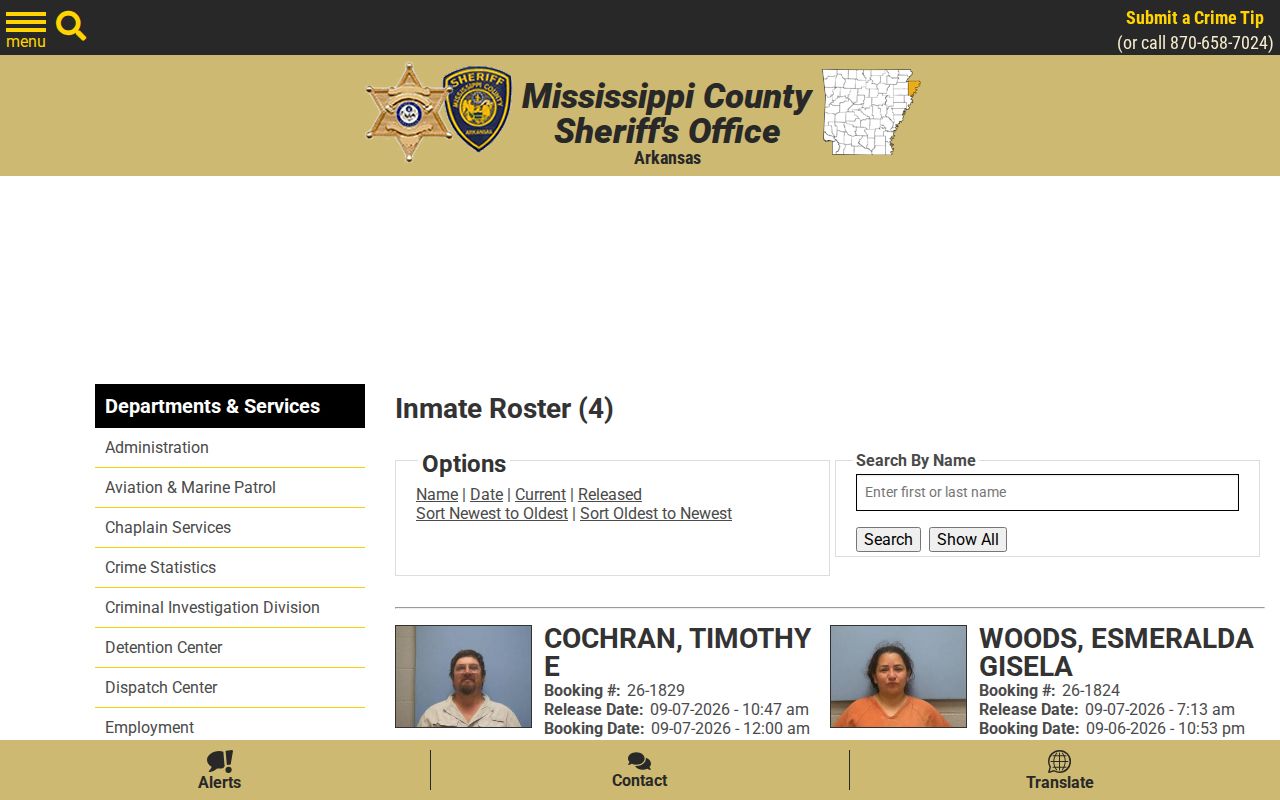
The recent-release page shows only a short window of time. Do not mistake it for a seven-day archive. It is not a full booking list either. Older arrests call for an archive request, not this page.
Weekend Mississippi County Arrest Reports
Weekends complicate the picture. The sheriff's detention page notes that trained jailers handle booking on nights and weekends. Staffing is not the issue. Timing is. No official source says when the public release view refreshes on weekends or holidays. A release only appears once the data gets entered. A city arrest may not reach the county until after transport.
Blytheville's own FAQ warns that information can lag several hours. That lag starts after police deliver an arrested person to the sheriff. Osceola may hold people in its city jail first. Manila posts no city booking feed or transfer schedule. Gaps like these reflect routing, not whether a record exists.
A cluster of entries on Monday proves nothing. It may reflect booking, transfer, release, or publication timing rather than a weekend arrest surge. When the exact sequence matters, recheck the official sources and call the responsible agency.
News Behind Mississippi County Arrests
KAIT8's Region 8 crime section offers the deepest local crime coverage. Individual stories may name the arresting city agency. Others describe a transfer to the Mississippi County Detention Center. Some credit a booking photo to sheriff records. The station works story by story. It is no daily roster.
The Osceola Times and the Northeast Arkansas Town Crier are local weekly papers. Neither publishes a routine arrest blotter or a steady stream of booking photos. The sheriff's press page carries dated agency news, training announcements, promotions, and occasional safety items. That page is not a booking log either.
Unofficial pages like Busted Newspaper, RecentlyBooked, Arrests.org, and Mugshots.zone can surface leads. Their data is often stale, mismatched, or incomplete. Court outcomes rarely follow. Begin with the sheriff's release view and current roster. Treat commercial sites and news as clues only. The regional crime source illustrates selective narrative coverage rather than a complete record.
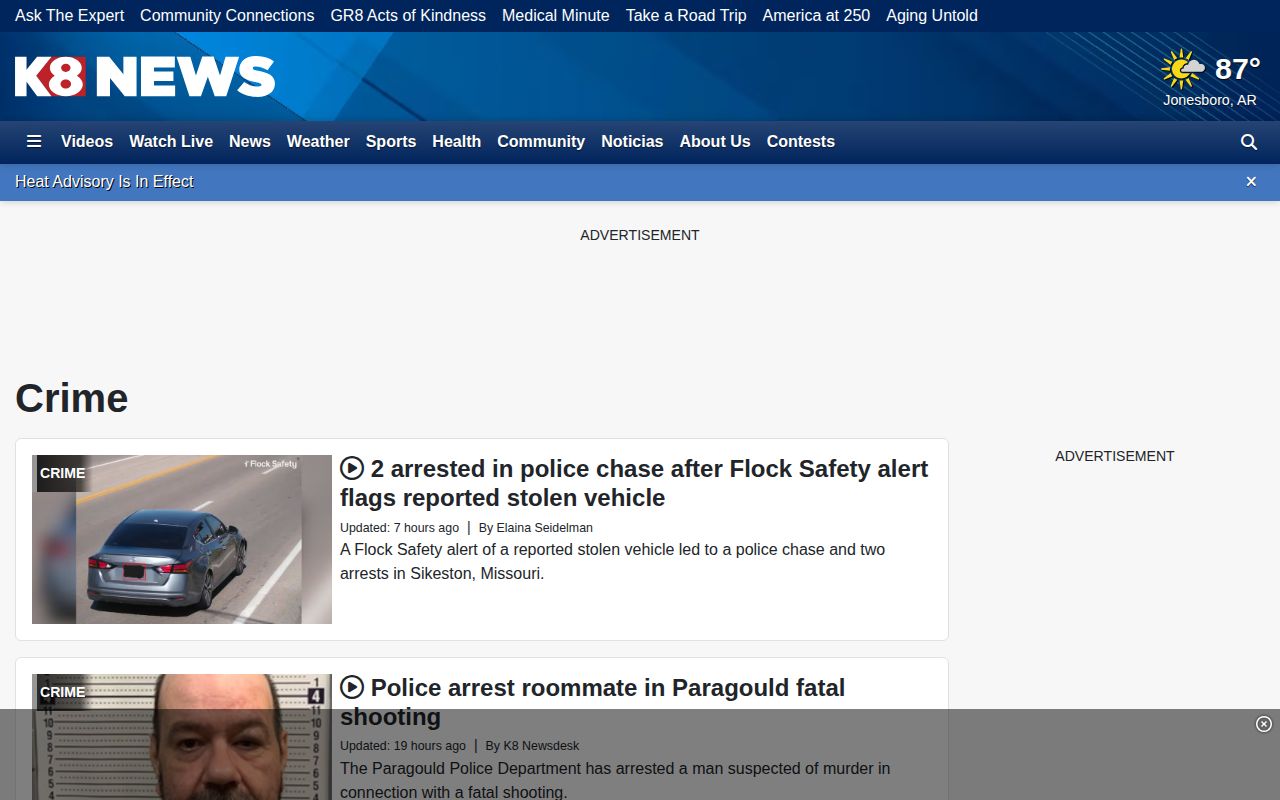
News can tie a municipal arrest to a Mississippi County booking. It cannot confirm present custody alone. Reports lag. Always check the jail roster for who is in custody now.
Archive Mississippi County Arrest Records
The 48-hour page is not the record. It is a short window into the jail's day. Official files outlive that window. Ark. Code Ann. § 13-4-404 spells out what a booking record contains: fingerprint cards, booking photographs, and detention logs. It also sets a five-year minimum retention period. After that, disposal requires an authorized process. Online visibility is a separate matter, so an entry can drop off the web while the underlying Mississippi County record stays on file.
Want an older booking sheet, detention log, or booking image? The sheriff's FOIA form is the route. Give the full name, approximate booking date, booking number if known, arresting agency, and the format you want. Ask for a cost estimate up front. No universal booking-photo price or turnaround time is posted. If an old arrest record cannot be located, press for details. Ask whether it is still in the system, sits in backup storage, moved to another custodian, or was disposed of under an order. The Arkansas State Archives accepts government records of enduring value, though no published inventory shows routine Mississippi County digital booking photos transferred there.
Note: Retention law protects the record category itself; it does not obligate the sheriff to keep an outdated roster link visible online.
Verify Mississippi County Arrest Outcomes
A release entry answers one question: when the jail recorded the person leaving custody. The reason often goes unstated. The court result never appears there either. Search Search ARCourts for public case events, then request a certified disposition from the clerk when an authoritative copy matters. Charges shift after booking. They can be changed, declined, dismissed, nolle prossed, tried, resolved by plea, or closed by another court order. Where the paper lives depends on the courthouse. Mississippi County operates courtrooms in both Blytheville and Osceola, so location can determine which clerk holds the record.
An arrest log is narrow by design. It records a custody event. Nothing more. Reading one tells you who was booked in Mississippi County and when, not how the case later unfolded in court.
Beyond the County Arrest Log
Match the person to the right custody system before searching. The county roster lists people held by the Mississippi County Sheriff. Arkansas VINE handles supported status and event notices. State prison time shows up in the ADC inmate search. That covers state correctional custody, not a fresh county booking. BOP and ICE each run separate federal and immigration locators.
No transfer rolls every record into one site. The sheriff stays custodian of the original county booking record, a city police department may hold the incident report, ADC may open its own state profile, and the court keeps its docket. Ask each office for the piece it owns.
Municipal arrests add a routing layer. Blytheville sends arrestees to the county jail. Osceola can use its city jail. Manila publishes no city booking list and sets no fixed transfer path. A city report may name the officer and incident, while the county record supplies the booking number and image. If the person lands in ADC, the state profile shows a new custody site and state photograph, though it never becomes the original county booking file.
Federal sentences call for the Bureau of Prisons locator. Immigration detention uses the ICE locator. That tool relies on its own identifying fields. Neither one replaces Mississippi County's release log, and Arkansas VINE does not cover them per the state source. Keeping these searches separate stops a short local release window from being mistaken for a record that vanished.
Public Record Search
Sponsored Results